Books are cheaper than heroin, but they DO add up....

Amy, Carrie, Chanin and Sarah buy (and read and review) their own stuff. They've been known to shop around from dealer to dealer looking for the best price. If you're interested in slipping them something to try out, just contact us.


Wednesday, April 24, 2013

Looking for Alaska by John Green

True confession:  I ruin things.  Usually nothing that important (though if you had queried my son the other day after I made him put a coat on before playing outside, you would have received a different point of view), but more like I am my own worst spoiler kind of ruin things.  I blurted out the twist in The Sixth Sense when I figured it out.  I watch cop shows and know who did it before we start a line-up.  I have a tendency to know how a book will turn out before I'm halfway through.  I try not to do this, because what's the fun in knowing it before it happens?  But I seem to have no control over it.  Please don't misunderstand.  I'm not saying I'm awesome or that I'm really smart or anything.  What I'm saying is: I ruin things.  That being said, I would like to make a disclaimer about this book.  So here goes.

Disclaimer:  I liked the book.  Really.  But I ruin things.

I've reviewed another book by John Green, The Fault in Our Stars, which I also liked.  But I ruined it for myself on a couple of different levels.  First and foremost, John Green's target audience is teen to young adult.  I am not a teen and sadly no longer a young adult. But as I read the book (in this case, both books) I could not put myself in the teen/young adult mind space.  If I had, I think I'd probably be writing John Green a fan letter right now rather than writing this review.  So that's my own issue, not Mr. Green's.  On another level.....I ruin things.  Both books were too easy to figure out.  Again, had I been a teen/young adult I would probably feel differently.  But I am old, so therefore I ruin.

In Looking for Alaska, we follow our narrator Miles to boarding school.  Miles asked his parents to be
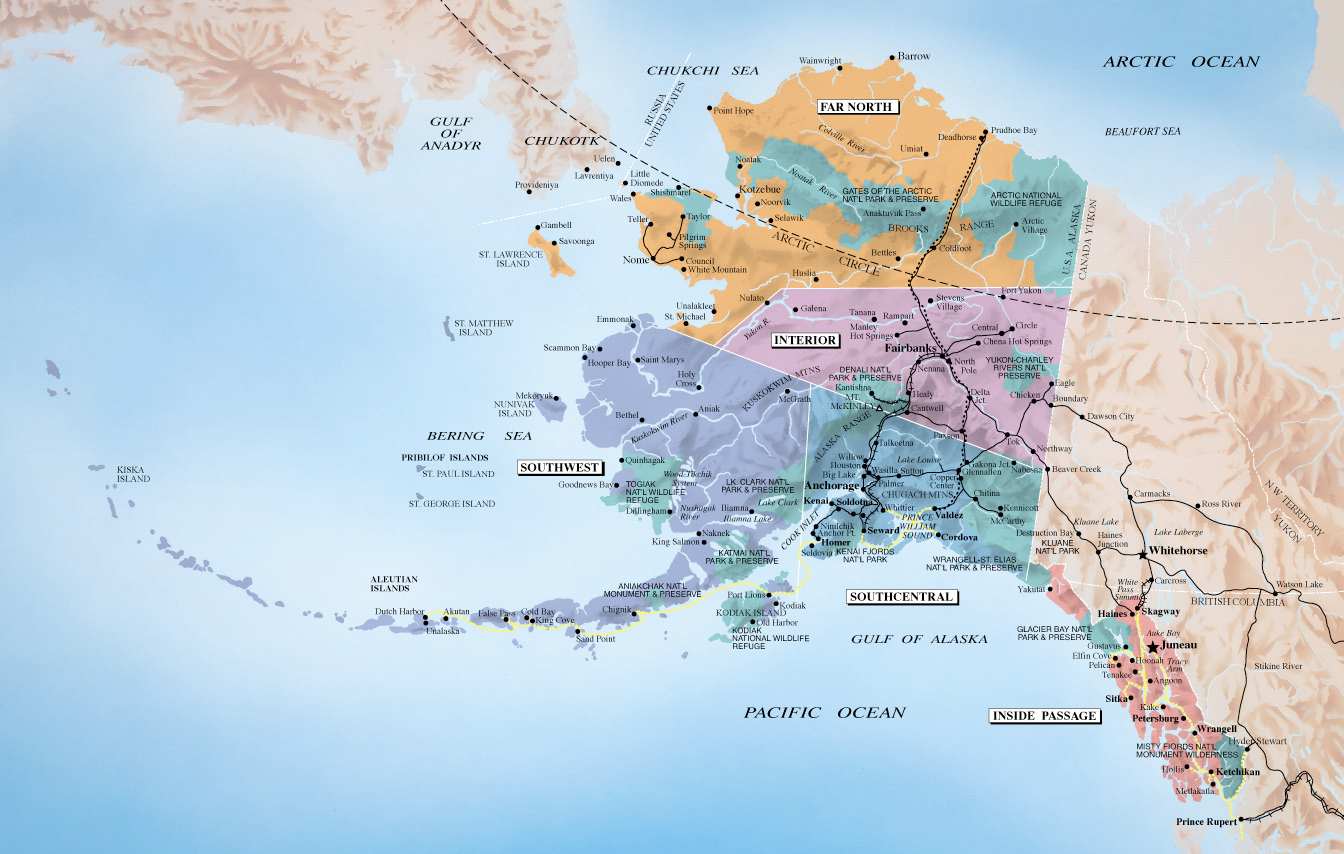
Not the Alaska we're looking for.
sent to his father's old stomping grounds as part of his search for a connection to something  that he wasn't finding at his public school.  Miles goes seeking Rabelais' "Great Perhaps" and does indeed find friendship, challenges, and an irritating number of pranks (sorry, as a teacher I can not condone half of the behavior in the book though that's not really my issue).  Miles becomes friends with his roommate Chip in short order as Chip introduces Miles to life at Culver Creek.  It seems there is a division between the boarders and the commuters, with the implication being that the boarders are of the "have not" variety while the commuters are the obnoxious and entitled "haves."  Nothing new there.  Through Chip, or the Colonel, Miles, or Pudge (also an annoying number of nicknames), becomes friends with Alaska.  Alaska is not a nickname.  And she immediately becomes the desire of young Pudge.  Nothing new here either.

I feel like this book and this movie
are second cousins.
Other things happen:  classes are attended, pranks are planned and pulled, alcohol and cigarettes get a lot of play.  However we all know the story really revolves around Pudge and Alaska; after all, he's the narrator and she's the title of the book.  Alaska has a boyfriend.  Pudge tries to date another girl.  Alaska is not exactly mentally stable.  Alaska, the Colonel, and Pudge must play the ultimate prank on the commuters AND the Eagle (the resident teacher/dorm monitor).  And so on and so forth.  I won't tell you the rest because I don't like to ruin things for other people, but I'm guessing you can probably take it from there.  I will say it's not the happy ending that "The Breakfast Club" is, but I bet you can navigate the issues that do come up.  

So to sum up:  I liked the book.  I thought it was too easy to figure out.  That might be because I'm old and have a preternatural way of ruining all things.  I also want to say to all teenagers everywhere that though you feel your pranks are epic and will never be outdone......they already have been.  So knock it off.  Anyway, it's a good book for the right person.  I am not that person. Pin It

Thursday, April 4, 2013

What I've Been Reading & Loving

Don't be jealous. This much mess is hard work.

I'm officially in the weeds.  I'm behind in my grading, I need to fire off three letters of recommendations, this post is a day late, and the dean just handed me a new project.

Now only is my desk a mess (and by extension the rest of my office), but so is my house and my HEAD.  I don't even know where to start to get myself organized.  Not even a clue.

I mention all this not to tell you that I haven't been reading, but as an explanation as to why I've only been reading comforting "sure things". I've been reading new books in existing series; all of which I've already reviewed.

So instead of sharing something totally new today, I'm going to remind you of what's been released lately in series in that I adore.


From possibly my favorite on-going series (maybe--I REALLY like the Kate Daniels books by Ilona Andrews), Frost Burned is the next installation of the Mercy Thompson books by Patricia Briggs.  I reviewed the series here, and Frost Burned is, like all the rest, and amazing urban fantasy with a kick-a$$ heroine who has a hot & capable mate and really, really good (if unusual) friends.

If you like werewolves and fae and vampires, this series is a must-read. (There are actually two on-going and related series by Briggs, the Mercy Thompson series and the Alpha and Omega series.  I highly recommend them both.  Start at the beginning if you can.)


Another excellent werewolf, fae and magic-filled series is the Lupi World series by Eileen Wilks.  The Mortal Ties, came out in October, so I'm actually a little late getting to this one.  Lily is, as always, capable and strong and so much in love with her crazy-hot fiance.  I reviewed the Lupi world books first here.  Mortal Ties is every bit as good as the rest of the series.  Read them.  I insist.


More recently, Nalini Singh released a collection of novellas, two previously unreleased in her psy-changeling series.  (She has another series involving vampires and angels, but this one is (kinda) shifter/cyborg/human based.  Both are excellent. I reviewed the Guild Hunter series here.)  The collection is entitled Wild Invitation, and it made me very, very happy.  The awesome part of novellas is how easy they are to start and finish whether you're diving in for the first time or re-reading them.  No major time commitment for the perennially late.

I can't seem to find a review of the psy-changeling series (which surprises me), but I think I mentioned them in the Guild Hunter review.  Even without a long explanation from me, this book is a good introduction to the series.


Also, in February, J.D. Robb (aka Nora Roberts) released the umpteenth, but still awesome books in the Eve Dallas series, Calculated in Death.  As always a good mystery and great continual character
development can be found in the pages of the books in this series. (I'm happy to report that the writers of Castle took my advice about long term relationships being the heart of a story after I first reviewed the Eve Dallas series.  If only this weren't a blog you could see my tongue firmly planted in my cheek. :D)


Last June, I told you that the only thing wrong with Discount Armageddon by Seanan McGuire was tragic waiting period for the second book in the series.  Huzzah! Midnight Blue-Light Special is out and is, perhaps, more awesome than its prequel.  The characters are developing, and I continue to love them.  Also, I'm pretty sure the
author is highly entertained by passages like the one where she talks about gorgon hygiene. (It's gross, but hilarious.)


Finally, Ilona Andrews has been generously posting a new serial online.  It's entitled Clean Sweep and it's part of a new Innkeeper Chronicles series.  You can read the posts here.  I'm totally addicted, and my only complaint is that the posts don't come fast enough or often enough.

Pin It

Thursday, March 14, 2013

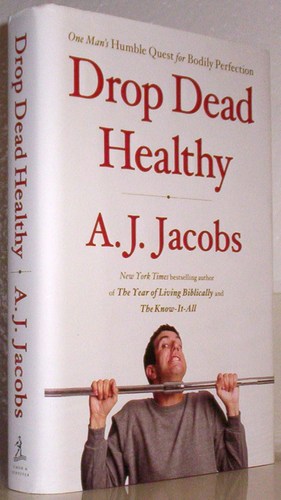
Drop Dead Healthy by A.J. Jacobs

He's not exactly the he-man type

For my first post on The Family Addiction, I'm going out of my "norm" and doing a non-fiction book. Normally I'm all about mysteries, but A.J. Jacobs was brought to my attention through my amazon.com Vine reviewer status, and I've enjoyed all of his books, including this latest offering.

A.J. Jacobs is an editor-at-large for Esquire and writes for it frequently. He is also the best-selling author of three other books in the same genre. A.J. doesn't exactly just research and write. He makes himself over, usually over the course of a year or so, on some (hare-brained?) scheme and writes about those experiences with humor and humility. I highly recommend his Know-It-All, where he attempts to read the Encylopaedia Brittanica from cover to cover, and his The Year of Living Biblically, where he tries to follow all the rules in the Bible and the Torah over the course of a year. However, we're talking about Drop Dead Healthy today, in which he takes two years total to try to become "the healthiest man alive."

Mr. Jacobs first begins his quest feeling like a bit of a slug, "mushy" and out of shape. He knows he needs to improve his nutrition, but what else? He gathers a team of doctors to help advise him on how to become the healthiest man alive - or, at least, the healthiest man he can be, and that includes thoughts on skull safety, podiatry, hearing loss, weight loss and exercise, heart and lung health, etc.

He understands that it's hard to tackle everything at once, so what we get is about a chapter per month on different aspects of health and trying different theories and methods to attain it. For example, when he decides to tackle the immune system aspect, he does talk to two different doctors - one who advocates lots of hand-washing and sanitizer, and one who is of the school of thought that we are hurting our natural immunity by creating super-germs.

What this means is that he does really impressive research for each and every aspect of the book, but it reads like humor, and he's never totally dismissive even of the most "out there" ideas he finds. He does make fun of himself from time to time, and maybe of some quirks of the practitioners of the various methods, but he never dismisses their ideas as "crazy" and I think that shows respect and heart.

However, since this is humor, he does often visit the extreme ends of any given area. He visits a trainer who does Caveman workouts in Central Park, and he visits a trainer who believes that you get just as much benefit from 20 minutes a week of exhausting your muscles with heavy weights as you do with hours of cardio. He tries several different methods to stop snoring, some of them just from infomercials. He practices Finger Fitness and wears a Pedestrian Helmet everywhere for a month. But, with everything, he does quote extensive studies and has pretty impressive facts, and you realize again how much work he put into this book.

Each chapter ends with a monthly checkup - including his weight, but also other silly-yet-relevant facts like (for Month 24):
Weight -159
Dogs Petted - 12
Minutes singing per day (possible stress reliever) - 10
Days practiced didgeridoo - 2
Frog calls memorized to keep brain sharp - 9

As an underlying plot, during his two years of health quests, he continually visits his obviously adored grandfather, whose health is steadily declining. It offers an interesting juxtaposition - while A.J. is trying to get healthy, his grandfather is facing the inevitable end for all of us, even those who are as healthy as possible.

He is significantly healthier by the end of the book, and there are several appendices of tips for both "normal" and "obsessed" people to take away from his research. He doesn't come to any one big conclusion, but there is real knowledge to be gained here, and many, many laughs to be had along the way.


Pin It